

MAC address anonymization and captive portals: our smart solutions
Public WFi access via captive portals has become commonplace for businesses looking to offer digital services to their customers and gain better insights into their behavior. However, the rise of MAC address anonymization on mobile devices presents a growing challenge for managing these networks and personalizing the user experience.
The challenge of MAC address anonymization
Traditionally, captive portals partially relied on a device’s MAC (Media Access Control) address to uniquely identify users and manage their sessions. This physical address, unique to each network card, enabled the tracking of a device on the network and the ability to remember its authentication status.
However, to enhance user privacy and prevent the misuse of this personal data for advertising tracking, mobile operating systems have gradually introduced MAC address randomization. This feature ensures that a device uses a temporary, randomized MAC address when connecting to new Wi-Fi networks or at regular intervals.
This shift began with Android 10 in 2019 and became the default behavior in Android 11 (2020) and iOS 14 (2020), where private MAC addresses are now used by default. More recently, with iOS 18 (2024), the situation has evolved once again: a new random MAC address is generated every two weeks for the same network. In practice, this means that users on iOS 18+ or macOS 15+ will no longer be automatically recognized after this period.
MAC address anonymization by operating system
-
iOS: Since iOS 14, the system uses a private (random) MAC address by default for each new WiFi network. With iOS 18, this private address is randomized every two weeks, even for known networks.
-
Android: Android 10 introduced MAC address randomization, and Android 11 made it the default for all new WiFi connections.
-
Windows: Windows 10 introduced the option to use “random hardware addresses” for WiFi cards. Users can enable this feature per network or globally.
-
macOS: Like iOS, macOS has implemented “private WiFi address” features that generate a unique MAC address per WiFi network.
The consequences for traditional captive portals
-
Degraded user experience: Users are forced to re-authenticate more frequently, as the portal no longer recognizes their device. Imagine a customer who visits your store regularly—they must fill out a form every time, which becomes frustrating. Likewise, a vendor who frequently visits your premises has to go through the entire login process every two weeks.
-
Loss of traceability: It becomes difficult to track a user’s journey within a site or during repeat visits, as their technical identifier (MAC address) changes frequently.
-
Session management complexity: Disconnecting and reconnecting with a new MAC address disrupts session continuity and access quotas.
This creates a major challenge for businesses that rely on captive portals for customer data collection, targeted communication, and access policy enforcement.
Weblib’s innovative solutions
At Weblib, we have anticipated these changes and developed solutions that allow businesses to maintain seamless WiFi connectivity and deep customer insights—even in the face of MAC address anonymization. We offer two complementary and innovative approaches: App Connect and Smart Authentication via SSID Login.
1. App Connect: seamless WiFi connectivity for your customers
Launched in early 2025, App Connect is a cutting-edge solution to MAC address anonymization, providing a fully transparent and secure Wi-Fi connection experience. If your company offers a mobile app to your customers, App Connect enables automatic, secure connection of their devices to your location’s Wi-Fi network.
How does it work for your customers?
In just a few seconds, through your mobile app (thanks to our easy-to-integrate SDK), users can activate App Connect. With just two clicks, they grant permission once—and then, like magic, their device connects automatically and securely to your WiFi network every time it’s in range. No captive portal. No repeated logins. A WiFi experience as seamless as at home—perfect for the retail customer who doesn’t want to fill out a form at every visit.
Key benefits for your business:
-
Optimal user experience: Customers enjoy a smooth, instant connection.
-
Deep customer insights: Detect when customers enter or leave, gaining valuable data on visit history and duration.
-
Targeted, personalized communication: Trigger notifications (via app, SMS, or email) when a customer enters or exits your site.
-
Increased engagement: Providing such seamless WiFi access encourages more users to download and use your mobile app.
2. Smart authentication via “SSID Login”
Even in the face of MAC address anonymization, Weblib’s captive portals (Ucopia and Smart Wifi) continue to play a vital role thanks to smart authentication methods that prioritize user identification over device identification.
What is SSID Login?
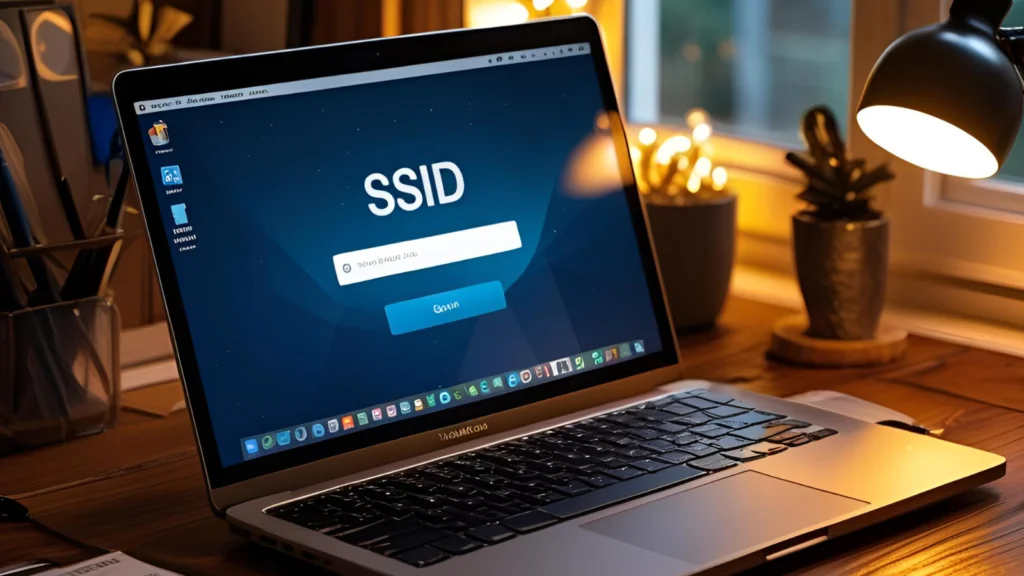
SSID Login is an innovative authentication method offered on our captive portals. It allows your customers to create a personal login (such as their email address) and a secure password directly on the portal’s welcome page. Once the account is created, they can use the same credentials to authenticate on a dedicated and private Wi-Fi network you provide.
Key benefits for users and your business:
-
A “Home-like” Experience: Users get a personal Wi-Fi key allowing them to connect to the secure network on every visit without going through the captive portal again. For vendors or regular visitors, this means a single sign-in, with the device recognized via their personal account—not their ever-changing MAC address.
-
User-Based identification, not device-based: Regardless of MAC address changes (due to anonymization), the system recognizes the user through their login. No more frustrating reauthentications!
-
Security and simplicity: Access is secured via a personal password. The same login can be used across multiple devices (smartphone, tablet, laptop).
-
Customer retention and insights: By relying on a persistent user ID (their created account or social login), you retain a comprehensive view of their connection history and preferences.
In addition to these solutions, Weblib platforms also support third-party authentication systems. For instance, users can log in using their social or professional profiles (Facebook, X/Twitter, Microsoft, etc.), simplifying access and offering more choice.
In conclusion
Times are changing—MAC address anonymization is intensifying with the arrival of iOS 18. As a result, WiFi authentication solutions must evolve!
At Weblib, we’ve turned this challenge into an opportunity through innovation. Whether with the unmatched seamlessness of App Connect or the flexibility of advanced authentication methods like SSID Login, we empower businesses with high-performing guest Wi-Fi management, enriched customer knowledge, and a frictionless user experience.
If you wish to go further or see our solutions in action, you can contact us to schedule a demo. We will be more than happy to discuss with you.