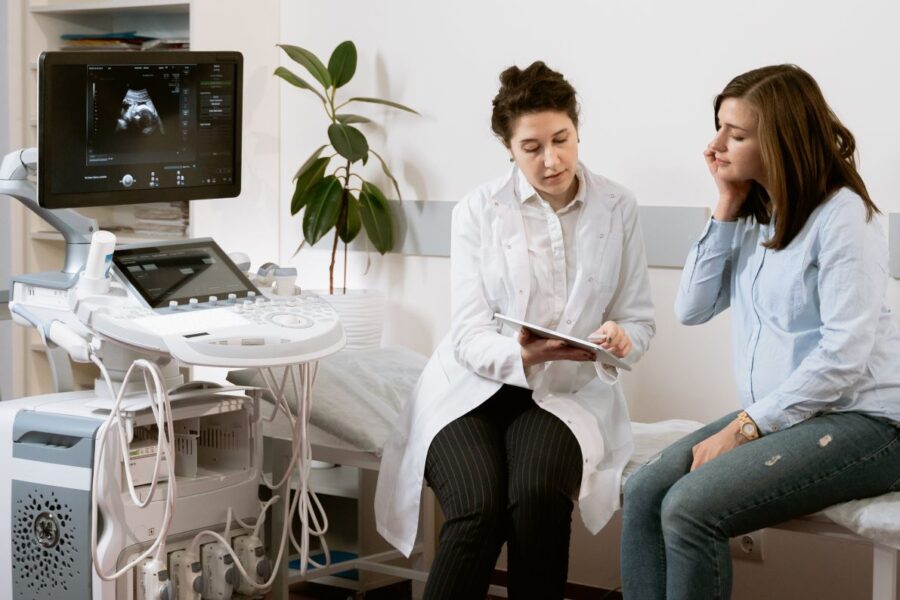

Why Reliable Wifi is Essential in Healthcare? – Without Wifi in a healthcare setting, things become much more challenging. As a patient, staying in touch with family or using apps to track your health becomes nearly impossible, leaving you isolated and stressed.
For healthcare workers, it means slower access to electronic health records, more manual monitoring of patients, and difficulty communicating with colleagues. Devices that rely on real-time data would need constant checking, and telemedicine options wouldn’t be available, making patient care less efficient and more time-consuming.
Wifi has become a game changer in modern healthcare, making everything smoother and more connected. For healthcare workers, it’s absolutely essential. Imagine being able to pull up a patient’s medical records, view their latest test results, or access detailed medical images—all in real time.
Reliable wifi in healthcare – The Weblib Advantage
Smart Wifi, powered by Weblib, enhances this process by providing a seamless captive portal experience for logging into the Wifi network. Using a customizable login page with various authentication methods—such as social login, forms, or even sponsorships—staff, patients, and visitors can securely access the network without any hassle.
For instance with Ucopia by Webib integrated into your Wifi network, doctors and nurses can log in through professional credentials, giving them access to critical medical systems, while patients and visitors can log in with their social media accounts or via a simple login form. This level of flexibility not only makes the experience more user-friendly but also ensures different user groups have the appropriate level of access.
Behind the scenes, Weblib’s admin console allows hospital administrators to manage and control the network effortlessly. Profiles can be set up for different user types—doctors, patients, visitors—ensuring secure, customised access based on each group’s needs.
Additionally, Weblib’s solutions give hospitals a way to collect valuable user data, monitor network usage, and analyse traffic through a powerful dashboard. For instance, hospitals can restrict access to certain non-medical websites for staff during work hours to improve productivity or create a more controlled experience for patients.
They can also use the captive portal to push important announcements or promote hospital services. All of this can be done while ensuring compliance with privacy laws and regulations.
The European wireless healthcare market is projected to grow from approximately USD 32.40 billion in 2024 to USD 83.45 billion by 2029, with a compound annual growth rate (CAGR) of 20.82% during this period. This growth is largely driven by the increasing integration of wireless technologies in healthcare settings, which facilitate better patient monitoring and data exchange
Internet of Medical Things (IoMT)
On a bigger scale, Wifi connects all sorts of medical devices and systems into what’s called the Internet of Medical Things (IoMT). This interconnected network allows hospitals to share data between departments, improving the flow of information and enabling real-time collaboration.
For example, data from heart monitors or infusion pumps can be accessed by multiple departments for more comprehensive patient care. With Wifi solutions from Weblib, hospitals can ensure that data flows securely while allowing IT teams to manage network traffic based on different user profiles, ensuring bandwidth is allocated where it’s needed most.
Ucopia adds another layer of network security and user management to this setup, providing customizable authentication policies for different user groups—ensuring only authorised personnel access sensitive medical data.
The Rise of IoT in Healthcare
By 2025, the number of Internet of Things (IoT) active connections in healthcare in the European Union is expected to reach 10.34 million. This surge in connections underscores the rising demand for efficient wireless connectivity, essential for supporting real-time patient monitoring and the management of healthcare systems.
In this context, Ucopia offers a valuable solution by simplifying the management of IoT devices through your Wifi network. This capability is especially critical for healthcare environments, where more devices are continuously connected, ensuring seamless operation and improved patient care through streamlined connectivity management.
In addition to Smart Wifi for managing connectivity, hospitals can benefit from Tab in Store’s Mobile Device Management (MDM) developed by Weblib to manage patient-facing devices. For example, tablets used in patient rooms can be locked into kiosk mode, ensuring they are only used for healthcare-related purposes.
Tab in Store’s MDM allows hospital IT teams to remotely update or manage these devices, ensuring they are secure, up-to-date, and functioning properly. Real-time monitoring of these devices ensures that they remain a helpful resource for both patients and staff without becoming a security risk.
At the end of the day, Weblib’s solutions have revolutionised how hospitals manage connectivity and user access. For healthcare workers, these tools make it easier to securely access information, monitor patients, and stay connected, while providing patients with continuous, personalised care—whether they’re in the hospital or at home.
And as technology continues to evolve reliable wifi in healthcare is essential, Weblib’s solution will only become more crucial in shaping healthcare, making care faster, smarter, and more connected for everyone.