

Nicolas Spéciel explores the many sides of Cloud-Managed WiFi
The Cloud has transformed the way businesses manage their digital ecosystem. From email to business applications, the shift to cloud-based services has become the norm. WiFi networks—vital for connectivity and user experience—are no exception to this trend. But what does “managing Wi-Fi in the Cloud” really mean?
Nicolas Spéciel, Head of Delivery at Weblib, explores the different aspects of Cloud-managed WiFi, revealing its advantages and limitations, who this approach is best suited for, and how a hybrid strategy can deliver the best of both worlds.
Cloud WiFi: the advantages of centralized management
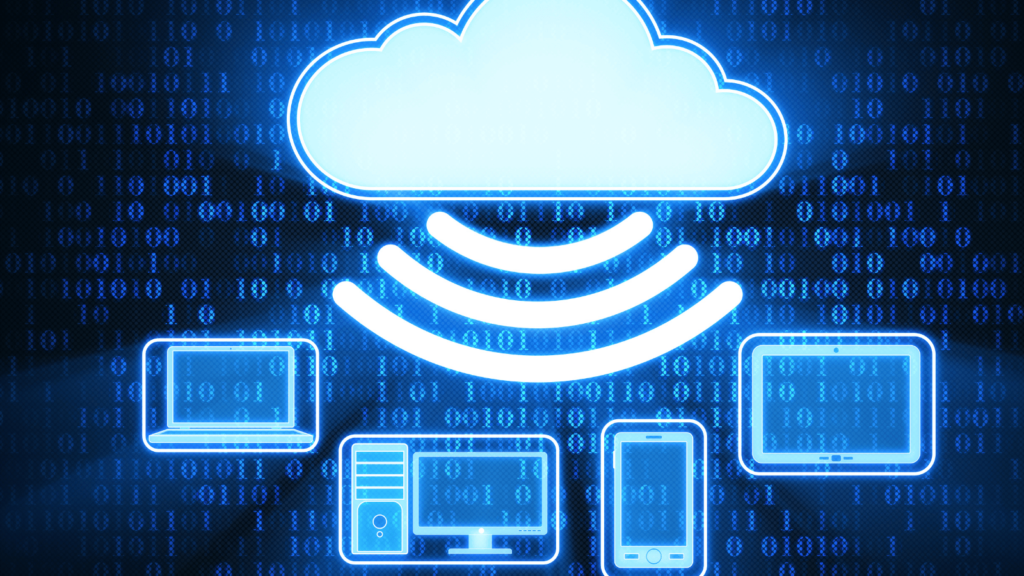
The idea of managing an entire WiFi network from a simple web interface is appealing. However, it is important to understand that not everything can be moved to the Cloud. The “radio” part—meaning the physical hardware such as access points—will always remain on-site.
“The concept of ‘Cloud Wi-Fi’ or ‘WaaS’ (WiFi as a Service) should actually be seen as ‘Cloud-Managed WiFi’: centralized, remote management of equipment that remains physically on-site.”
The key advantages of Cloud-Based management
- Agility and rapid deployment: For a restaurant chain or hotel group, for instance, deploying a new WiFi configuration across dozens or even hundreds of sites can be done in just a few clicks from a centralized console. This ability to standardize and quickly propagate configurations cuts deployment times from several weeks to just a few hours.
- Simplified management: Maintenance, firmware updates, and monitoring are centralized, reducing operational complexity. IT teams, freed from repetitive manual tasks at each site, can focus on higher-value activities.
- Reduced on-site equipment: Apart from access points and switches, the need for local servers and controllers is drastically reduced. This translates into direct savings in hardware purchases, power consumption, and physical space requirements.
- Accessibility for SMBs: Smaller organizations without dedicated IT teams can benefit from enterprise-grade management without investing in specialized skills or complex equipment. They gain access to advanced features that were once reserved for large enterprises.
The limits of a Cloud-Based approach
Unsurprisingly, Cloud-based management requires a stable, high-performance, and reliable internet connection. Latency, bandwidth, and connectivity costs can be major barriers. It is important to distinguish between consumer fiber (around €40/month in France today) and professional-grade connections with guaranteed bandwidth and SLAs, which can cost 10 to 20 times more.
“This dependency on the network is critical in regions with poor fiber coverage, or for specific sectors such as maritime industries.”
The Main limitations
- Dependence on infrastructure: To fully leverage the Cloud, on-site equipment must be relatively recent and compatible with a cloud-based approach. Migration can be costly and complex for companies with aging infrastructure, often requiring a complete refresh of their hardware.
- Data sovereignty and security: This is a major concern for many organizations. Even anonymized connection data is considered sensitive. Defense, healthcare, and other critical sectors often prefer to keep full on-premise control for absolute data sovereignty and security.
Cloud WiFi: who is it for?
Cloud-managed WiFi mainly targets two types of businesses that share a common need for efficiency and simplicity. First, multi-site organizations such as large retail groups, franchises, hotel chains, and branch networks.
“Any organization with a large number of distributed sites will benefit from the centralization and agility offered by the Cloud, ensuring consistent security policies and a unified user experience.”
Small and medium-sized businesses (SMBs), on the other hand, are also ideal candidates—provided they have a modern network infrastructure and lack the resources for complex IT management. The Cloud allows them to offload this complexity and enjoy a reliable service without hiring specialized staff. Conversely, companies with very outdated infrastructure, those in areas with poor connectivity, or organizations with strict security and sovereignty requirements (such as Critical Infrastructure Operators) will generally need to forgo Cloud services.
Hybrid approach: the best of both worlds
“A hybrid approach recognizes that a company may have a heterogeneous infrastructure and varied needs. The goal is not to maximize the share of Cloud at all costs, but to find the right balance.”
A hybrid model is often the most pragmatic and flexible solution because it adapts to a company’s real-world constraints. Weblib, with its Ucopia and Smart WiFi solutions, perfectly illustrates this flexibility:
-
Scenario 1: Aging infrastructure. Consider a company with a legacy infrastructure that is not Cloud-compatible. Deploying Ucopia on-premise allows local management of traffic and access control while integrating with the Smart WiFi captive portal in the Cloud. This provides a modern login interface and easy integration with third-party services (CRM, etc.) without requiring a full infrastructure overhaul.
-
Scenario 2: Performance and efficiency. An industrial site may need to handle traffic locally for performance reasons. By deploying a Ucopia server, configuration and authentication remain centralized in the Cloud, while user traffic stays on-site.
-
Scenario 3: Flexibility. Companies can mix both approaches. Within the same organization, smaller sites can route traffic through Ucopia Cloud, while larger sites use local controllers—all managed from a single interface. Meanwhile, the captive portal is handled via Smart WiFi for every site, ensuring a unified user experience.
“This ability to mix local and Cloud approaches, deploy physical or virtual servers, and integrate them with SaaS services allows for a tailor-made solution that meets each client’s security, performance, and maturity requirements.”
Ultimately, “Cloud WiFi” is less a technological revolution than an evolution in infrastructure management. Its agility and simplicity are undeniable, but its limitations—especially in terms of connectivity and data sovereignty—are equally real. The right strategy is not a dogmatic choice between on-premise and Cloud, but rather the ability to build a flexible, hybrid architecture. By combining the robustness of local control with the agility of Cloud management, businesses can finally achieve WiFi that is high-performing, secure, and perfectly adapted to their operational needs.
Would you like to discuss your current infrastructure or future sustainable network challenges? Our experts are here to help, do not hesitate to contact them.